The Evolutionary Blueprint of Healthcare Artificial Intelligence: 10 Key Milestones

Updated: Jul 30
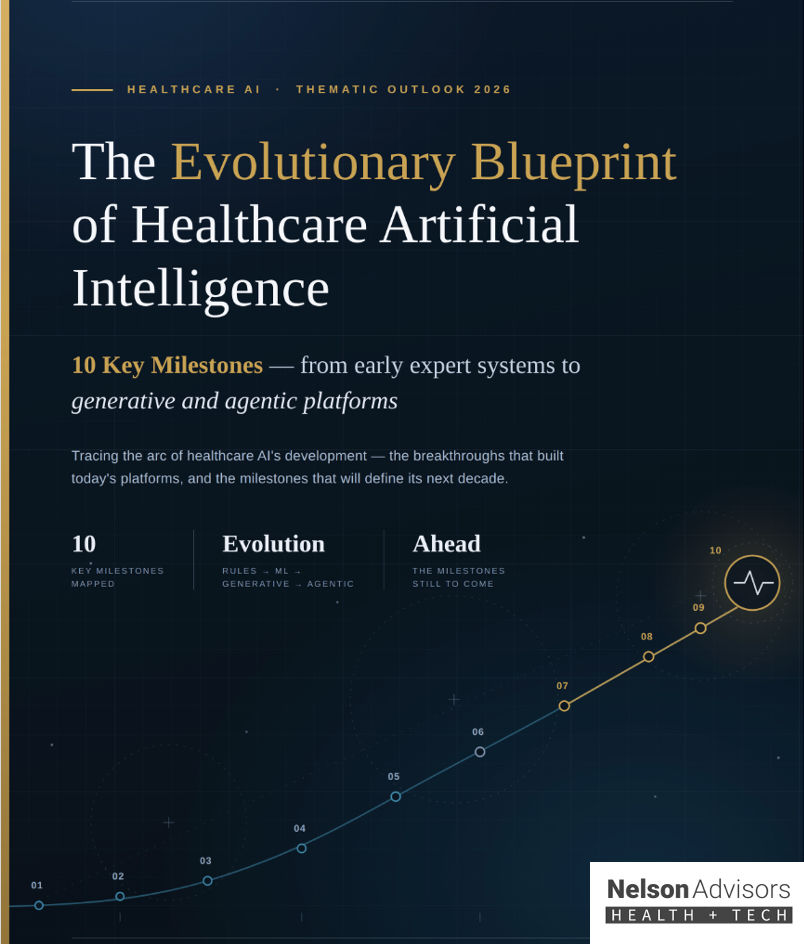
The trajectory of artificial intelligence (AI) in healthcare reflects a transformation from rigid, symbolic logic systems to statistical deep learning architectures, culminating in self-reasoning, multimodal foundation models. This technological maturation has not occurred in isolation; rather, it has been driven by the co-evolution of algorithmic breakthroughs, hardware acceleration, regulatory frameworks, and clinical reimbursement structures.
Historically, clinical adoption was choked by workflow friction, standalone computing constraints, and an unready regulatory apparatus. Over five decades, ten specific pivotal developments dismantled these barriers, establishing artificial intelligence as a core pillar of modern clinical decision support, diagnostic imaging, structural biology, and administrative automation. Analysing these historical milestones elucidates the underlying mechanisms, systemic ripple effects and future vector of AI in medicine.
Milestone 1: MYCIN and the Formalisation of Rule-Based Expert Systems (1976)
Developed at Stanford University during the 1970s by Edward Shortliffe, Bruce Buchanan, and their colleagues, MYCIN represented the first major attempt to apply artificial intelligence to complex clinical diagnostic reasoning. Written in Lisp, MYCIN was a backward-chaining expert system designed to identify blood-borne bacterial pathogens, specifically bacteremia and meningitis and recommend patient-specific antibiotic regimens adjusted for body weight and clinical severity.
MYCIN’s primary architectural innovation was its complete decoupling of the domain-specific knowledge base from its inference engine—a structural pattern that later spawned the essential expert system shell (EMYCIN). The system relied on a knowledge base of approximately 450 to 600 production rules extracted from human infectious disease specialists. To address the inherent ambiguity of medical evidence, MYCIN introduced the Certainty Factor (CF) model. The CF metric quantified changes in belief on a scale from $-1$ (complete disconfirmation) to $+1$ (absolute confirmation), utilising a parallel combination function to combine modular rules without requiring the massive conditional probability tables demanded by classical Bayesian inference:
$$CF(H, E) = MB(H, E) - MD(H, E)$$
In a formal evaluation conducted at Stanford Medical School involving diverse test cases, MYCIN achieved a 65% acceptability rating from independent sub-specialists, outperforming senior faculty members whose individual therapeutic choices ranged between 42.5% and 62.5% acceptability.
Despite its clinical efficacy, MYCIN was never deployed in actual hospital wards. The system was bounded by severe infrastructure limitations, existing as a standalone program on a DEC PDP-10 mainframe that required clinicians to manually type lengthy answers to interactive text prompts. Lacking integration with Electronic Health Records (EHRs), which did not exist at scale, data entry created prohibitive workflow friction.
Furthermore, institutional hesitation regarding legal liability, ethical responsibility for automated recommendations, and the lack of real-time computer terminals at the bedside consigned MYCIN to academic legacy. Nevertheless, MYCIN established the theoretical foundation for clinical decision support systems (CDSS), demonstrating that machine logic could mirror specialist-level therapeutic selection while highlighting that clinical integration requires ambient data ingestion rather than manual user input.
Milestone 2: FDA Clearance of R2 Technology’s ImageChecker M1000 (1998)
In June 1998, the United States Food and Drug Administration (FDA) granted Premarket Approval (PMA) to R2 Technology’s ImageChecker M1000 system, marking the first commercial clearance of a Computer-Aided Detection (CAD) system for screening mammography. The ImageChecker M1000 digitised analog film mammograms via a laser digitiser into high-resolution grey-scale matrices, subsequently processing the data through specialised digital signal processors (DSPs) and shallow artificial neural networks.
The underlying algorithms searched for two distinct pathological hallmarks of breast carcinoma: micro-calcifications and mass lesions. Micro-calcifications were identified by detecting bright intensity clusters as small as 40 micrometers, which were visually flagged for the radiologist using triangular overlays. Mass lesions, particularly spiculated structures with radiating dense spokes, were flagged using asterisk overlays. In pivotal clinical trials, the system achieved 98% sensitivity in detecting microcalcifications and 86% sensitivity for mass lesions.
The commercial authorization of the ImageChecker M1000 codified a crucial regulatory and operational paradigm: AI as a "second reader". To secure regulatory approval, R2 Technology designed the workflow such that the computer output was concealed until after the radiologist had completed an independent primary review. The device was explicitly non-autonomous; its legal intended use was strictly limited to directing physician attention back to suspicious regions of interest to minimize observational oversight.
This milestone catalysed two major structural shifts across healthcare. Economically, it triggered targeted reimbursement policies, as Medicare and private insurers created add-on CPT codes to cover CAD processing fees, driving rapid commercial penetration across breast imaging centers. Operationally, it forced the medical imaging sector to transition from physical X-ray film to full-field digital mammography (FFDM), providing the digitised data pipeline necessary for subsequent deep learning applications.
However, widespread deployment of early CAD systems later revealed key limitations: while sensitivity was high, low specificity generated elevated false-positive rates (averaging approximately 0.5 false marks per image), which in turn increased recall rates, patient anxiety, and downstream diagnostic biopsy costs.
Milestone 3: The Deep Learning and Convolutional Neural Network Revolution (2012–2015)
Between 2012 and 2015, the field of medical image analysis underwent a computational transition, migrating away from hand-crafted feature extraction toward deep spatial representation learning. Prior machine vision techniques relied on computer scientists manually defining mathematical descriptors for edges, textures, and shape metrics, an approach that failed to capture the subtle phenotypic heterogeneity of human tissue across diverse patient cohorts.
The convergence of massive multi-core Graphical Processing Units (GPUs), expanded digital imaging repositories, and deep Convolutional Neural Network (CNN) architectures fundamentally altered this baseline. Deep CNNs bypassed manual feature engineering by passing raw pixel matrices through stacked hierarchical layers. Lower layers automatically learned primitive visual spatial features such as edges and intensity gradients, intermediate layers aggregated these into complex tissue structures, and deep layers learned non-linear pathological representations directly correlated with clinical ground truth.
This architectural shift unlocked unprecedented diagnostic accuracy across radiologic, dermatologic, and histopathologic subspecialties. Instead of evaluating isolated geometric thresholds, models learned to analyze high-dimensional spatial contexts, discovering subtle radiomic signatures invisible to the human eye. This era established deep learning as the foundational engine for medical computer vision, proving that artificial neural networks could generalise across complex clinical images and setting the stage for prospective clinical validation trials.
Milestone 4: Gulshan et al. and the Validation of Deep Learning in Ophthalmology (2016)
In 2016, a research team led by Varun Gulshan at Google published a landmark study in the Journal of the American Medical Association (JAMA), demonstrating that a deep convolutional neural network could match the diagnostic performance of board-certified ophthalmologists in detecting referable diabetic retinopathy (DR) from retinal fundus photographs.
Diabetic retinopathy represents a leading cause of preventable blindness among working-age adults globally. Standard clinical management requires annual funduscopic evaluations, but systemic shortages of eye specialists create severe diagnostic bottlenecks. The study trained a deep network on a development dataset of nearly 130,000 retinal images, each graded by multiple ophthalmologists to establish a rigorous gold-standard ensemble ground truth.
When evaluated on independent, fully adjudicated validation datasets, the algorithm achieved an Area Under the Receiver Operating Characteristic curve (AUC) of 0.99 for detecting referable DR, defined as moderate-to-severe non-proliferative DR or proliferative DR. The model demonstrated sensitivity and specificity values both exceeding 90%, operating directly on the professional receiver operating curve of retinal specialists.
The broader significance of the Gulshan et al. study extended far beyond ophthalmology. It provided the first large-scale, methodologically rigorous proof that deep CNNs could achieve diagnostic parity with medical specialists on complex clinical screening tasks. By demonstrating robust performance across diverse patient populations and variable camera optics, the publication transformed medical AI from theoretical computer science into an empirically validated clinical science. It triggered a surge in clinical trial activity, establishing fundus photography as the proving ground for real-world automated screening algorithms.
Milestone 5: FDA Authorisation of IDx-DR as the First Autonomous AI System (April 2018)
In April 2018, the FDA granted De Novo authorization to IDx-DR (subsequently re-branded as LumineticsCore), developed by a team led by retinal specialist Michael Abràmoff. IDx-DR was approved to automatically analyse fundus images captured via a Topcon TRC-NW400 camera to detect more-than-mild diabetic retinopathy (mtmDR) in adults diagnosed with diabetes who had not previously been diagnosed with DR.
Unlike prior CAD systems that served as auxiliary visual aids, IDx-DR marked a historical boundary as the first fully autonomous AI diagnostic system cleared across any medical subspecialty. The software was authorized to issue a binding, point-of-care clinical decision, either identifying the presence of referable diabetic retinopathy requiring specialist evaluation or returning a negative screening result, without requiring a physician to review or sign off on the images. Authorisation was grounded in a prospective, multi-centre trial enrolling 900 diabetic patients across 10 primary care clinics, where the system achieved a sensitivity of 90.7% and a specificity of 87.2%, surpassing pre-specified primary endpoint superiority targets.
The clinical workflow of IDx-DR was engineered to guarantee diagnostic reliability in ambient primary care environments. When a non-specialist technician acquires retinal photographs, the client software executes an automated image quality validation step in real time, evaluating focus, color balance and target localization. Images that fail quality thresholds are immediately rejected, prompting re-acquisition. Once validated, the software securely transmits the data to a cloud-based deep learning engine that analyzes spatial micro-vascular features. The engine then transmits an automated diagnostic output directly back to the primary care provider's electronic interface.
The authorization of IDx-DR established vital precedents across primary care delivery, reimbursement structuring, and regulatory policy. By enabling non-specialist primary care staff to complete specialist-grade screenings during routine diabetes checkups, the system expanded diagnostic access to rural and underserved populations where annual specialist exam compliance was historically low.
To support commercial deployment, the American Academy of Ophthalmology and the CPT Editorial Panel established the first Category I CPT code (92229) specifically for point-of-care autonomous AI retinal analysis, providing a sustainable revenue model. Concurrently, the FDA established a formal De Novo classification framework for autonomous Software-as-a-Medical-Device (SaMD), introducing mandated Predetermined Change Control Plans (PCCP) to regulate post-market algorithm updates.
Milestone 6: Domain-Specific Language Transformers in Clinical NLP (2019)
Following the 2017 introduction of the self-attention Transformer architecture, general-purpose Natural Language Processing (NLP) models demonstrated exceptional mastery over open-domain syntax. However, when applied to unstructured clinical records, such as intensive care progress notes, discharge summaries, and pathology reports, general models degraded. Medical text is characterised by extreme non-standard abbreviation density, clinical shorthand, complex subspecialty jargon and contextual negation dependencies.
In 2019, biomedical researchers addressed this semantic gap by developing specialized BERT variants, most notably BioBERT and ClinicalBERT. BioBERT was initialized with general BERT weights and pre-trained over vast biomedical literature corpora from PubMed abstracts and PubMed Central full-text articles. ClinicalBERT extended this specialisation further by pre-training on clinical notes from the MIMIC-III database, directly internalising the idiosyncratic syntax of bedside clinical narrative documentation.
These specialised clinical language models altered health informatics. By resolving complex semantic context, negation, and temporal relationships within clinical narratives, domain-adapted transformers unlocked high-accuracy named entity recognition (NER), relation extraction, and automated medical coding. This allowed healthcare systems to automatically convert millions of unstructured EHR text entries into standardised, computable clinical observations, accelerating real-world evidence (RWE) research, clinical trial cohort identification, and automated disease surveillance.
Milestone 7: AlphaFold 2 and Computational Structural Biology (November 2020)
In November 2020, DeepMind’s AlphaFold 2 achieved a historical breakthrough at the 14th Critical Assessment of Structure Prediction (CASP14) competition, solving the 50-year-old "protein folding challenge". AlphaFold 2 predicted the three-dimensional atomic structures of proteins from their linear amino acid primary sequences with accuracy levels competitive with arduous, expensive experimental techniques such as X-ray crystallography and cryo-electron microscopy.
AlphaFold 2 utilized an attention-based spatial graph neural network architecture, termed the "Evoformer," which simultaneously modeled evolutionary constraints derived from Multiple Sequence Alignments (MSAs) and 3D physical spatial geometry. The system iteratively refined spatial protein representations, outputting precise atomic coordinate positions alongside confidence metrics.
The implications for medicine represented a paradigm shift in upstream drug discovery and molecular biology. Historically, determining a single protein structure required years of laboratory effort and hundreds of thousands of dollars. AlphaFold 2 democratised structural biology by computational prediction, rapidly mapping virtually the entire human proteome.
This breakthrough radically accelerated target identification in rational drug design, allowing researchers to computationally model viral surface proteins, characterize disease-causing genetic variants, and design targeted small-molecule therapeutics with unheralded speed. AlphaFold 2 expanded the reach of medical AI from clinical diagnostic management directly into foundational biochemical discovery.
Milestone 8: Generative Pre-trained Transformers and Conversational AI (2020–2022)
The release of OpenAI’s GPT-3 in 2020 (boasting 175 billion parameters) and the subsequent public debut of ChatGPT in November 2022 marked the transition of artificial intelligence from task-specific discriminative classification to generalised natural language generation. Built upon autoregressive transformer architectures fine-tuned via Reinforcement Learning from Human Feedback (RLHF), these models demonstrated conversational interaction, complex reasoning synthesis, and natural language generation.
Within healthcare, the deployment of consumer-facing conversational AI triggered immediate, radical disruption. By January 2023, ChatGPT had scaled to over 100 Million active users, becoming an accessible conduit for patient health inquiries and symptom self-evaluations. In clinical operations, health systems began testing generative models to alleviate the operational burden of administrative documentation—specifically drafting patient portal responses, summarising clinical histories, and auto-generating discharge notes.
However, this generative paradigm introduced critical safety challenges. Early generalist large language models were susceptible to "hallucinations", generating factually incorrect or clinically hazardous statements with high linguistic confidence. Unlike traditional deterministic or classification algorithms, autoregressive models lacked explicit medical grounding and verifiable uncertainty bounds. This tension between administrative utility and safety highlighted the absolute necessity for specialised clinical fine-tuning, rigorous alignment, and systemic guardrails before generative architectures could be integrated into direct patient care workflows.
Milestone 9: Multimodal Specialised Foundation Models (2024)
By 2024, the medical AI ecosystem evolved beyond single-modality text models to specialised, multimodal generalist medical AI (GMAI) architectures. Google’s Med-Gemini model family demonstrated this frontier, integrating high-capacity multimodal understanding with sophisticated clinical reasoning mechanisms.
Architecturally, Med-Gemini introduced uncertainty-guided inference protocols designed to safeguard clinical reasoning. During complex diagnostic consultations, the model generates multiple parallel reasoning paths for an input prompt and calculates the Shannon entropy across the predicted answer distribution. High entropy indicates elevated epistemic uncertainty. When uncertainty exceeds a pre-calibrated safety threshold, Med-Gemini automatically invokes an agentic search strategy, formulating targeted search queries to retrieve relevant medical literature from external web databases. The model then synthesises this external evidence into its context window to resolve reasoning conflicts and issue a factually grounded consensus recommendation.
In parallel, Med-Gemini addressed multi-modal context integration by leveraging custom encoders capable of processing 2D fundus images, 3D radiologic scans, continuous ECG waveforms, and long-form surgical videos directly alongside textual narratives. Utilising ultra-long context windows, the architecture can ingest entire, unedited longitudinal electronic health records to resolve complex clinical retrieval tasks spanning years of heterogeneous patient history.
Evaluating these specialised capabilities demonstrated structural advancements over generalist baselines. Med-Gemini established a state-of-the-art accuracy of 91.1% on the benchmark MedQA (USMLE) dataset, outperforming prior models such as Med-PaLM 2. Across multimodal medical tasks, including the New England Journal of Medicine (NEJM) Image Challenge, it surpassed general-purpose models like GPT-4V by an average relative margin of 44.5%. Furthermore, expert evaluations indicated that Med-Gemini’s outputs for clinical summarisation, referral letter generation, and medical note simplification were frequently preferred over human physician baselines, establishing generalist multimodal AI as a viable assistant across multi-disciplinary healthcare workflows.
Milestone 10: Systemic Integration, Regulatory Adaptation and Health Equity Governance (2024+)
The modern era of medical artificial intelligence is defined by the transition from localised algorithmic deployment to enterprise-grade governance, adaptive regulatory oversight, and equity-focused performance frameworks.
Regulatory bodies have recognized that fixed, static software review pipelines are inadequate for continuous, learning machine learning architectures. The FDA implemented curated AI-Enabled Medical Device tracking initiatives and established Predetermined Change Control Plans (PCCPs). PCCPs allow developers to pre-specify operational boundaries and retraining protocols, enabling models to adapt to shifting local clinical data distributions post-approval without requiring iterative premarket submissions, provided safety protocols are strictly met.
Concurrently, systemic focus has shifted to algorithmic fairness and health equity. Early medical algorithms often exhibited unmonitored performance drops across specific racial, ethnic, or socioeconomic subgroups due to historical biases present in training data. Frameworks such as the Health Equity Assessment of Machine Learning Performance (HEAL) now mandate rigorous demographic subgroup stratifications during clinical trials. Modern validation requires proving that AI systems maintain stable diagnostic sensitivity and specificity across diverse cohorts regardless of gender, age, race, or geographic site.
Comparative Matrix of Historical Healthcare AI Milestones
Milestone & Timeline | Core AI Architecture | Operating Paradigm | Primary Clinical Domain | Key Impact & Technological Advancement |
MYCIN (1976) | Backward-Chaining Rule Engine + Certainty Factors | Standalone Interactive Expert Decision Support | Infectious Diseases (Bacteremia/Meningitis) [cite: 2] | Proved specialist-level therapeutic selection; established rules/reasoning separation. |
R2 ImageChecker M1000 (1998) | Shallow Neural Networks + Digital Signal Processing | Non-Autonomous "Second Reader" | Screening Mammography | First FDA PMA approval; established AI reimbursement & film digitization. |
Deep CNN Revolution (2012–2015) | Deep Convolutional Neural Networks (CNNs) | Automated Feature Representation | Diagnostic Medical Imaging | Replaced manual feature engineering with hierarchical end-to-end learning. |
Gulshan et al. (2016) | Deep Residual CNN Ensembles | High-Accuracy Disease Screening | Ophthalmology (Diabetic Retinopathy) [cite: 8] | Achieved AUC 0.99; proved deep learning parity with subspecialist physicians. |
IDx-DR Authorisation (2018) | Cloud-Based Deep Learning + Feature Analysis | Fully Autonomous Point-of-Care System | Primary Care Retinal Screening | First autonomous FDA de novo clearance; created standalone CPT billing codes. |
Clinical NLP Adaptation (2019) | BioBERT / ClinicalBERT Transformers | Context-Aware Text Parsing | Electronic Health Records & Clinical Literature | Solved clinical shorthand/jargon semantic gaps; enabled real-world evidence extraction. |
AlphaFold 2 (2020) | Attention Spatial Graph Neural Networks | 3D Structural Protein Prediction | Structural Biology & Drug Discovery | Solved 50-year protein folding challenge; mapped proteomes to accelerate therapy design. |
Generative AI Era (2020–2022) | Autoregressive LLMs (GPT-3 / ChatGPT) [cite: 1] | Conversational Interface & Generation | Administrative Notes & Patient Dialogue | Democratized natural language interaction; introduced real-time clinical note generation. |
Multimodal GMAI (2024) | Med-Gemini Multimodal Foundation Models | Agentic Reasoning & Search Retrieval | Multi-Disciplinary Generalist Medicine | Achieved 91.1% on MedQA; combined search-augmented reasoning with long context EHRs. |
Lifecycle Governance (2024+) | Adaptive Post-Market AI / ML Frameworks | Continuous Lifecycle Oversight | Enterprise Health System AI Deployment | Instituted Predetermined Change Control Plans (PCCPs) and health equity monitoring. |
Evolutionary Trajectories in Algorithmic Autonomy and Integration
The technical and operational assumptions governing clinical decision support systems have undergone structural shifts over the past five decades. Examining system characteristics across historical eras highlights how algorithmic progression progressively mitigated workflow friction and enhanced diagnostic autonomy.
Epoch & Representative System | Data Ingestion Method | Reasoning Mechanism | Diagnostic Autonomy Level | Primary Operational Barrier |
Symbolic Era(MYCIN, 1976) | Manual teletype text entry by clinician | Static heuristic production rules with certainty weights | Non-deployed advisory consultation | Prohibitive manual data entry friction & lack of digital records |
Digitized CAD Era (R2 ImageChecker, 1998) | Optical digitizer scanning of analog film | DSP feature extraction & shallow neural nets | Non-autonomous "Second Reader" post-primary review | High false-positive rates causing diagnostic recall fatigue |
Autonomous Narrow Deep Learning (IDx-DR, 2018) | Direct digital fundus camera acquisition | Deep convolutional neural networks | Fully autonomous point-of-care triage output | Narrow task specificity limited to single disease entities |
Multimodal Foundation Era(Med-Gemini, 2024) | Interleaved text, 3D imaging, EHR, & video streams | Self-training LLMs with agentic uncertainty-guided search | Interactive generalist decision partner | Hallucination mitigation & complex continuous safety governance |
Cross-Cutting Synthesis and Strategic Outlook
The development of medical AI demonstrates that algorithmic advancement alone is insufficient to transform clinical delivery. MYCIN achieved subspecialist-level reasoning accuracy in 1976, yet failed to achieve clinical adoption because it operated outside contemporary workflows and lacked digital data integration. Conversely, R2 Technology’s ImageChecker succeeded commercially not because its underlying shallow networks were flawless, but because its non-autonomous design aligned seamlessly with existing radiological workflows and fee-for-service reimbursement models.
The landmark authorisation of IDx-DR in 2018 reconciled this historical dichotomy. By combining deep learning performance with automated image-quality assurance engines, it demonstrated that software could safely execute autonomous clinical decisions. This compelled regulatory agencies to formulate De Novo clearance pathways and prompted the American Medical Association to establish dedicated CPT reimbursement structures, proving that novel technology requires parallel innovation in regulatory and financial architecture.
Today, the convergence of multimodal foundation models, long-context EHR understanding, and real-time agentic search strategies addresses the historical fragmentation of medical software. Rather than relying on a patchwork of disconnected single-task algorithms, one for retinal screening, another for note transcription, and a third for NLP extraction, modern generalist medical AI architectures synthesise text, imaging, wave-data, and long-term patient records within a unified cognitive frame.
As these multimodal models transition into enterprise deployment, systemic focus is shifting toward lifecycle safety, bias mitigation and continuous equity monitoring. The establishment of Predetermined Change Control Plans, standardised health equity frameworks, and uncertainty-guided inference protocols ensures that as artificial intelligence advances toward greater autonomy, it remains firmly anchored by clinical safety, transparency, and actionable patient benefit.
Nelson Advisors > European MedTech and HealthTech Investment Banking
Nelson Advisors specialise in Mergers and Acquisitions, Partnerships and Investments for Digital Health, HealthTech, MedTech, Health IT, Consumer HealthTech, Healthcare Cybersecurity, Healthcare AI companies.www.nelsonadvisors.co.uk
Nelson Advisors regularly publish Thought Leadership articles covering market insights, industry trends, deal commentary, market analysis & predictions @ https://www.healthcare.digital
Nelson Advisors publish Europe's Leading Healthcare Technology Investment Banking Newsletter every week, join 5000+ HealthTech and MedTech subscribers today! https://lnkd.in/e5hTp_xb
Nelson Advisors pride ourselves on our DNA as ‘Founders advising Founders.’ We partner with entrepreneurs, boards, corporates, venture capital and private investors to maximise shareholder value and investment returns.www.nelsonadvisors.co.uk
#NelsonAdvisors #HealthTech#MedTech#DigitalHealth #HealthIT #Cybersecurity #HealthcareAI #FemTech #ConsumerHealth #Mergers #Acquisitions #Partnerships #Growth #Strategy #NHS #UK #Europe #USA#Canada#Commonwealth#CorporateDivestitures #VentureCapital #PrivateEquity #Founders #SeriesA #SeriesB #Founders #SellSide #TechAssets #Fundraising #BuildBuyPartner #GoToMarket #PharmaTech #BioTech #Genomics
Nelson Advisors LLP
Hale House, 76-78 Portland Place, Marylebone, London, W1B 1NT
Nelson Advisors LLP
Hale House, 76-78 Portland Place, Marylebone, London, W1B 1NT
Meet Nelson Advisors @ 2026 Events
Digital Health Rewired > March 2026 > Birmingham, UK
NHS ConfedExpo > June 2026 > Manchester, UK
HLTH Europe > June 2026, Amsterdam, Netherlands
HIMSS AI in Healthcare > July 2026, New York, USA
Bits & Pretzels > September 2026, Munich, Germany
World Health Summit 2026 > October 2026, Berlin, Germany
HealthInvestor Healthcare Summit > October 2026, London, UK
HLTH USA 2026 > October 2026, USA
Barclays Health Elevate > October 2026, London, UK
Web Summit 2026 > November 2026, Lisbon, Portugal
MEDICA 2026 > November 2026, Düsseldorf, Germany
Venture Capital World Summit > December 2026 Toronto, Canada


Comments